Tuesday, April 16, 2013

Introduction to San Diego Bay

The location of the San Diego Bay is obviously in San Diego County, also near the US-Mexico border. The size of bay is about 19 kilometers or in simpler terms, 12 miles long. 

An interesting fact about the 'The bay' it used to be the base headquarters of major ships for the United States Navy, until the US entered World War II and then the headquarters became Pearl Habor, Hawaii.


 The San Diego National Wildlife Refuge Complex is located in Seal Beach, Tijuana Slough, and Sweetwater Marsh.
 The purpose of the San Diego National Wildlife is to support habitats as diverse as coastal marshes and uplands, oak woodlands, freshwater marshes in south San Diego Bay.

Some of the activities that occur in the bay are like the Big Bay Boom, which is held on the fourth of July, you can also go on cruises, visit shops and go to museums.

 The South San Diego Bay restoration and enhancement project dredges former salt ponds to create tidal channels and tidal influence.


Monday, March 25, 2013

The Surface Water &Global Temperature

Thermal Inertia: San Francisco and Norfolk, Virginia are on the same latitude meaning they are the same distance from the equator. However San Francisco is warmer in the winter and cooler in the summer than Norfolk, Virginia is because of the air. The air in San Francisco has moved over the ocean, while Norfolk is over land.

Temperatures moderated on water take much longer than air to heat up and longer to cool. Therefore, on hot days, water (oceans,lakes, rivers) absorbs heat keeping the air somewhat cooler. When air gets cool, water slowly releases heat to the atmosphere raising the air temperature.

Thursday, March 14, 2013

The Chemistry of Water

Water molecules are bonded because each hydrogen nucleus is bound to the central atom  by a pair of electrons that are shared between, and chemists call this a covalent chemical bond (shared electron pair)


The positive charge forms where the hydrogen ends and the negative charge forms at the oxygen end of the water molecule.

The chemistry of water that allows an insect to walk on water is called surface tension

What's unique about water is that it is able to change from a liquid to a solid, and form liquid to gas.

Tuesday, March 12, 2013

Sediment Cores & History

The author of this article is Alyson Santoro, and she is studying the microbes in the nitrogen cycle.

The technique that she uses is called a multicore, in which they drop a multibeam and get samples out of it.

The samples get pushed into the coldaun-measure and oxygen concentration at different depths in the core and then take samples of carbon hydrogen.

The name of the research vessel is the RSS Melville

Tuesday, February 26, 2013

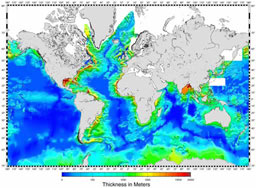
Economic Importance of Marine Sediments

Bellwork questions:

Some products that come from sediments are toothpaste, paint, swimming pool filters, and building materials for roads and structures.

1/3 of the worlds energy comes from sediments (oil & gas)


Sand and Gravel is extremely important because they are valued at more than $510 Million!


Webquest Questions
Sediments are classified by two groups, either clastic or chemical. Then from there it differentiates between the type of rock, texture, composition and type.

There are four types of sediments. Lithogenous, Biogenous, Hydrogenous, and Cosmogenous. 
Lithogenous- derived from rock, which is also pelagic so it settles away from the water column and will be most prevalent away from land
Biogenous- A sediment consisting of the shells and skeletons of dead organisms. (Calcium carbonate)
Hydrogenous- are formed by precipitation of minerals from the ocean’s water or can be formed as a new mineral
Cosmogenous- extraterrestrial in nature and are generally like miniature meteorites. These sediments are the remains of impacts of large bodies of space material (such as comets and asteroids). 


Marine Sediments by tianna.brown12 on GoAnimate

Video Maker - Powered by GoAnimate.

Wednesday, February 13, 2013

Abyssal Plains & Hills


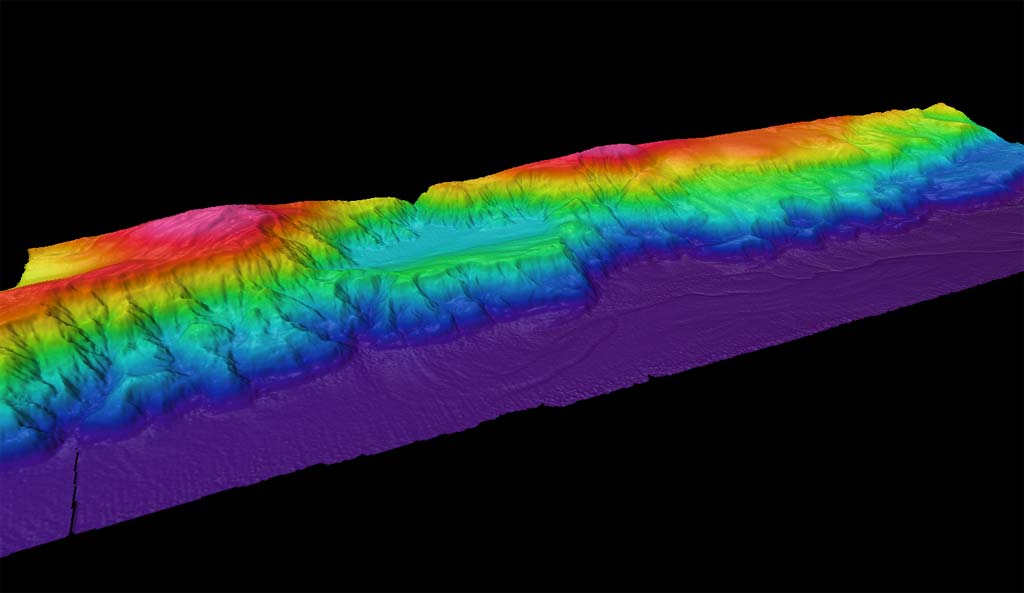
The definition of an abyssal plain is an underwater plain on the deep ocean floor.

Abyssal plains are usually found at depths between 3000 and 6000. Lying generally between the foot of a continental rise and a mid-ocean ridge,

 Abyssal plains cover more than 50% of the Earth’s surface.

 They are among the flattest, smoothest and least explored regions

Tuesday, February 12, 2013

Adaptations of Sea Caves

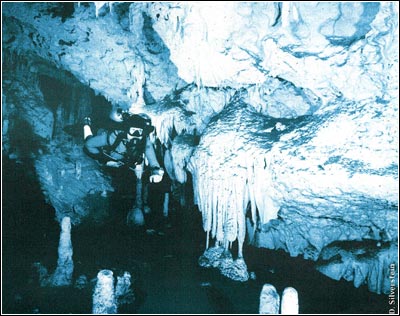
1. Some typical adaptation for these animals are lack of pigmentation, reduction in the size of eyes or absence of eyes altogether, development of sensory mechanisms that do not depend on light for detecting food or predators.

 2. Oxygen is not plentiful in the caves because photosynthesis does not exist because of the lack of light; as well as low water circulation, yet the creatures still adapt.

3. Adaptations occur because they happen at random events and if there's an advantage the organisms is more likely to survive and reproduce than other organisms

4. This happens because anchialine caves tend to be oxygen depleted because no photosynthesis does not occur.